1. Introduction
Archaeological decorations have specific cultural and historical significance in which they provide legacy rich in art and handicraft traditions focusing especially on ancient civilizations. AlUla, located in Northwestern Saudi Arabia, is known for its archaeological rich legacy characterized by rock art, tombs and ancient settlements. The compound designs and decorations in AlUla archaeology attracted many researchers and historians and inspired contemporary craftsmen and designers regarding developing ornamental accessories using contemporary printing techniques.
| [1] | Tariq Hamed Al-Janaini, M., Al-Sayed Zalat, A., Ali, &Sabri Al-Saidi. (2013). Innovative Decorative Designs Inspired by Islamic Art and Their Application on Children’s Clothing. Journal of Specific Education Research, 2013(32), 578-615. |
[1]
Archaeological decorations in AlUla are considered a representation of the artistic creativity and cultural manifestation of the past. The designs are often characterized by geometric patterns, compound carvings and symbols reflecting the ancient inhabitants’ beliefs, traditions and aesthetics. These decorations, etched onto rocks, pottery, and other artifacts, reflect glimpses into the daily life, social structures, and artistic manifestation of the civilizations that thrived in this region in the past
| [2] | Al-Qadi, Nani Muhammad Ali, Muhammad Gamal al-Din Hassouna, Samir Hafez, & Wahad. (2022). Applications of Origami Art Using 3D Digital Printing Technology in Fashion Design. Journal of Architecture, Arts, and Humanities, 7(33), 349-371. |
[2]
.
In recent years, discovering archaeological sites in AlUla and studying their decorative arts provoke renewed attention to using these ancient archaeological decorations in contemporary art designs since artists and designers realized the formal aesthetic values of such decorations. Thus, they sought to integrate these complex patterns and their symbolic items in modern artistic pieces. Contemporary art printing techniques have become of benefits regarding giving life to archaeological decorations in AlUla. In addition, digital printing and other contemporary techniques on metal surfaces allow for the accurate and flawless replication of complex designs onto various metals and metal surfaces such as silver, gold, and bronze
| [3] | Atef Al-Motai, &Maysarah. (2020). The Effect of Designing Interactive Digital Content on Improving Student Performance in a Printing Techniques Course within Academic Graphic Design Programs (A Case Study in the Graphic Design Program at Al-Zahra College for Women). Journal of Architecture, Arts, and Humanities, 5(20), 500-521. |
[3]
.
Integrating heritage decorations in AlUla does more than merely honor this region's past; it preserves and promotes its legacy. Each piece of ornamental accessories becomes a wearable work of art, conveying tales of ancient civilizations through symbols originated in AlUla. By adorning oneself with these unique crafted pieces, people can appreciate eternal beauty that transcends generations and connect with the past while embracing the Kingdom's cultural identity
| [4] | ShaabanHaider, F., & Farida. (2012). Developing New Materials and Techniques for Intaglio in the Field of Printing. Journal of Specific Education Research, 2012(24), 493-522. |
[4]
.
Combining decorations of archaeological rocks in AlUla and contemporary printing techniques in designs of ornamental accessories represents a nature of unique integration for legacy and contemporality. It also indicates the constant impact of art in its various forms, and draws attention to the way of preserving culture through innovative designs. However, excavators continue their discoveries to reveal ancient decorations in AlUla, thus increasing the constant cultural reflection in the region and innovating creative ornamental accessories of a heritage concept with a global consistency.
1.1. Research Problem
The application of contemporary printing technologies presents significant potential for integrating designs that feature archaeological decorations from AlUla. However, the researcher must confront numerous challenges to fully benefit from the historical significance and cultural dimensions of these decorations. The archaeological decorations in AlUla are priceless artifacts that embody both historical and cultural value and require rigorous preservation and protection. The process of reshaping these decorations for use in ornamental accessories raises concerns about maintaining the authenticity, integrity, and precision of the original designs. This research emphasizes the critical importance of ensuring the accurate details and high-quality production of the decorations while preserving their historical context. Additionally, these decorations require a nuanced balance between respecting traditional elements and fostering innovative creativity to be converted into modern ornamental accessories designs. The designer researcher must devise methods to adapt and reinterpret these decorations to meet contemporary aesthetic preferences while preserving the intrinsic essence and symbolic significance of the original designs.
Based on the foregoing discussion, the following research question arises:
To what extent can the cultural and archaeological rock decorations in AlUla be effectively utilized in the design of ornamental accessories through contemporary printing techniques, employing advanced surface treatments on various metallic surfaces, in alignment with Saudi Arabia’s Vision 2030 AD.
1.2. Research Objectives
This research intends to:
(i) Utilize the archaeological rock decorations in AlUla to create designs that are suitable for individual ornamental accessories globally.
(ii) Create designs obtained from archaeological decorations of rocks in the form of art pieces as ornamental accessories using contemporary printing techniques by using surface treatment for various metal surfaces.
1.3. Research Significance
Demonstrate how to utilize archaeological rock decorations in AlUla to create contemporary ornamental accessories and preserve the cultural heritage of these symbols, thereby, enable researchers to enhance their understanding of the symbols of ancient civilizations and their artistic expressions.
Provide opportunities for specialists to learn how to integrate contemporary printing techniques and process various metal surfaces in ornamental accessories.
This research sheds light on the adaptation of archaeological decorations, focusing on how to balance tradition with innovation, and reshaping these decorations to meet contemporary global aesthetic preferences while preserving their cultural significance. Furthermore, the research examines the integration of these decorations with contemporary printing techniques, all in alignment with Saudi Arabia’s Vision 2030 AD.
(i) Contribute to the cultural revival of AlUla’s traditions while also enhancing tourism.
(ii) Expand avenues for creative expression and develop products inspired by heritage cultures.
(iii) Create opportunities for market expansion and establish specialized markets within the printing industry and other artistic domains.
1.4. Limitations of the Research
i. Objective Limits: (Archaeological Rock Symbols, AlUla in the Kingdom of Saudi Arabia, Contemporary Printing Techniques and Their Potential, Digital Printing, 3D Printing, UV Printing, Thermal Printing, Metal Surfaces, Ornamental Accessories)
ii. Spatial Limits: Kingdom of Saudi Arabia
iii. Temporal Limits: 2024 AD.
2. Research Methodology
The research depends on the descriptive and analytical approach of the theoretical aspect, it also depends on the experimental approach of the practical aspect.
2.1. Research Terminology
2.1.1. Digital Printing
Digital Printing means printing photos and texts using direct digital techniques retrieved from electronic files without using traditional printing plates. Additionally, digital printing allows you to print at high speed, in limited quantities, and at a low cost compared with conventional printing. Moreover, Digital Printing includes printing with appliances, such as (Inkjet and Laser printers). Digital printing is widely used to produce promotional materials, books, journals, and other products
| [5] | Abdullah, & Ahmed Al-Rifai. (2021). Developing Students’ Creative Abilities in Fashion Arts Through the Innovation of Printed Fashion Designs Influenced by Modern Art Schools Using Various Printing Techniques. Journal of Architecture, Arts, and Humanities, 6(28), 172-203. |
[5]
.
2.1.2. 3D Printing
3D Printing is a manufacturing technique that creates 3D shapes by adding successive layers of materials according to a pre-made digital design. However, this method is used in several fields, including medicine, engineering, architecture, designing products in various shapes and arts. 3D Printing is a turning point in manufacturing as it facilitates the production of composite forms and individual customization of products
| [6] | Safi El-Din, & Ahmed Mohamed. (2018). 3D Printing and Its Impact on Interior Designers and the Interior Design Process. Journal of Architecture, Arts, and Humanities3, (Issue No. 11(2)), 44-58. |
[6]
.
2.1.3. Primitive Decorations
Primitive decorations are shapes and decorations used by people to represent ancient cultures in several civilizations, characterized by simplicity and symbolism. It usually refers to religious beliefs and social traditions. Additionally, Primitive Decorations found in archaeological sites reflect the imaging techniques that date back thousands of years and carry stories about these civilizations’ daily lives, traditional rituals and beliefs
| [7] | Al-Sharif, &Basem bin Nayef Muhammad. (2022). The Effectiveness of Employing 3D Printing Technology Applications in Developing Concepts and Scientific Thinking Among Middle School Students with Learning Difficulties in Medina. Education (Al-Azhar): A Peer-Reviewed Journal for Educational, Psychological, and Social Research, 41(193), 176-203. |
[7]
.
2.1.4. Surface Treatments by Using Digital Printing on Metals
It is a set of printing techniques and methods used for reworking, changing and raising the value of metal surfaces. These surface treatments involve applying layers of ink or paintings on the intended metal surface in order to create a specific decoration text, photo, or pattern. However, these treatments are used for particular purposes. Furthermore, these techniques include (Engraving, Thermal, Laser printing and other methods). The Surface Treatments enhance the metal products' appearance and increase their commercial and artistic value
| [8] | Al-Mahar. (2015). Achieving Optimal Functional and Aesthetic Properties of Home Furnishing Fabrics Using Modern Printing Techniques. Journal of Home Economics, Menofia University, 25(2), 245-283. |
[8]
.
2.1.5. Digital Halftoning (Inkjeting)
Digital Halftoning means printing a specific text or photo using a matrix of tiny dots. It is widely used in dot matrix printers. Moreover, it is executed by striking the ink line with small dots on the material to be printed on, forming several patterns to get the desired shape. Digital Halftoning printers are considered one of the oldest types of electronic printers, and they use carbon paper to print multiple copies
| [9] | Gibson, I., Rosen, D. W., & Stucker, B. (2015). Additive Manufacturing Technologies: 3D Printing, Rapid Prototyping, and Direct Digital Manufacturing (2nd ed.). Springer. |
[9]
.
2.1.6. Metal 3D Printing
Metal 3D Printing is one of the latest manufacturing techniques for forming metal parts and components through incremental forming. This technique includes using laser or electron beams to accurately melt one metal powder layer by layer in order to create the final desired shape or figure. 3D printing facilitates the design and manufacturing of complex and composite parts, which can hardly be manufactured through traditional manufacturing methods. However, it is mainly used in industries including but not limited to (Aviation, cars, medicine, etc.)
| [10] | Frazier, W. E. (2014). Metal Additive Manufacturing: A Review. Journal of Materials Engineering and Performance, 23(6), 1917-1928. |
[10]
.
2.1.7. Primitive Art Era
This age extends from the Old Stone Age (Paleolithic) until the beginning of the New Stone Age (Neolithic). It also refers to the first historical periods in which communities started implementing artworks. Primitive Art is marked by drawings and engravings found on the caves’ walls, along with the small sculptures made of bones and stones. Additionally, Primitive Art is a reflection of primitive people's lives, beliefs and interactions with the environment
| [10] | Frazier, W. E. (2014). Metal Additive Manufacturing: A Review. Journal of Materials Engineering and Performance, 23(6), 1917-1928. |
[10]
.
2.2. Theoretical Framework
2.2.1. First Aspect: Nature of Primitive Decorations and Engravings
(i). Definition of Primitive Decorations
Primitive Art, also known as Primitive Decorations or Prehistoric Art, is a reference to ancient forms of artistic expression that an archaic human used during the Old Stone Age, Middle Stone Age, and New Stone Age. These decorations used to be simple and embellished at the same time. They were usually used to decorate things such as household items, weapons, clothes, and items used in religious rituals
| [11] | Hajjaj, M. A. A. M. F., Muhammad Abdel Hamid Muhammad Fathi, Tawfiq, Nashwa Abdel Raouf, Al-Marakbi, &Hajar Salah Al-Desouki. (2023). The Use of Digital Printing Technology to Create Print Designs on Various Materials and Its Application in Recycling Evening Dresses to Achieve Sustainability. The Scientific Journal of the Faculty of Specific Education - Menofia University. 3-50, (35)10. |
[11]
.
(ii). AlUla Archaeological Decorations Types in the Kingdom of Saudi Arabia
AlUla region, located in northwest the Kingdom of Saudi Arabia, is known for its rich monuments and cultural significance. Additionally, the region is a cradle for several ancient civilizations including the Nabataean that left behind a wealth of primitive decorations and engravings that carry lots of artistic meanings, stories and connotations
| [12] | Muhammad Al-Beheiri, M. &Mosaed (2018). Innovative Formative Dimensions of Square Kufic Calligraphy as an Approach for Creating Prints Using Relief Printing Techniques Through Kinetic Typographic Design. Journal of Specific Education Research, 2018(49), 281-303. |
[12]
.
(iii). Below Are Some of the Primitive Decorations Found in AlUla Such as
Geometric shapes: These Decorations used simple geometric shapes such as a circle, a triangle and a square in order to create complex patterns on variety of materials such as pottery, jewelries and other things.
Animals’ shapes and symbols: Animals such as (ibex, deers and snakes) were frequently used in primitive decorations and engravings. These symbols were simple and designed to reflect how the artist observes nature.
Human images shapes: The simple human shapes, that often have exaggerated features, were drawn and painted in the primitive art. These shapes may have represented ancestors, legendary creatures, etc.
Abstract symbols: It reflects different kinds of lines, such as (spiral, refracted and arched lines), and they were used to express meaning and to tell stories. Additionally, these symbols may have meaningful connotations.
Rock Art: In the Kingdom of Saudi Arabia, AlUla contains several places that have that type of art that animal and human decorations and engravings characterize in addition to abstract symbols. These decorations were usually made of simple tools such as stones and bones and dated back to the Neolithic age (around 10,000 - 4,500 BC).
(iv). Features and Characteristics of the Primitive Decorations in AlUla
Simplicity and Elegance: The Primitive Decorations are marked by their simple and embellished design, which expresses the artist’s apparent artistic view. Thus, simple geometric shapes, natural symbols, and engravings are used with outstanding competence in decorating tools in general and pieces of art
| [13] | Ismail Iraqi. (2022) The role of 3D printing technology in achieving sustainability by producing contemporary quantitative furniture that competes with traditional furniture. EKB Journal Management System, 7(6), 462-475. |
[13]
.
Symbolism: The Primitive Decorations include symbols that reflect ancient social beliefs, customs and traditions. Additionally, these simple symbols and engravings are associated with religious rituals, legends and everyday life habits.
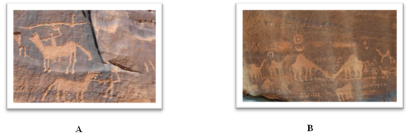
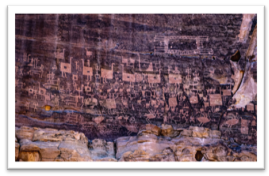
Figure 1 shows the simple used symbols and decorations.
Figure 1. The figures show the simple used symbols and decorations. (The Camel engravings mark their historical importance to Arabs for thousands of years).
Variety of Materials: Primitive Communities in AlUla used various materials and substances to create distinguished engravings and decorations, including (stones, bones and mud) since using each material and substance reflects a certain level of creativity and innovation.
Utilization of Nature: Several primitive decorations and engravings in AlUla reflect the close association with nature, including the symbols and shapes used in Primitive Art, such as photos, animal and plant drawings and geographic shapes.
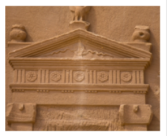
Geometric shapes: It was commonly used in the Primitive Decorations. Furthermore, simple shapes such as circles, triangles and squares were used to decorate clay, tools and weapons. As illustrated in
Figure 2.
Figure 2. The figure shows the geometric patterns used. (Archaeological Engravings in AlUla, Saudipedia, n.d)
Rock Art: The rock engravings and symbols and the paintings and photos on rocks are one of the most important features of the artistic primitive decorations in AlUla. Moreover, these artistic works reflected various religious beliefs, daily life and social events.
Repetition and Symmetry: It is a system that primitive decorations tend to use in their designs, which gives visual appeal and continuity in pattern and shape.
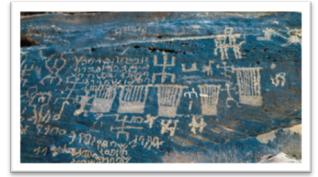
Abstraction: It is a feature that is frequently found in primitive decorations and engravings, especially in shapes and designs, which allows personalized interpretation and thorough comprehension of these symbols. As illustrated in
Figure 3.
Primitive tools: Primitive tools, such as stones and bones, were used in the design and engraving of decorations. In addition, these tools reflect simple yet effective artistic techniques.
Cultural Influence: The primitive engravings and decorations in AlUla reflect the cultural intermingling and influence of various civilizations that have passed through it, which underscores the exchange of ideas and cultures.
2.2.2. Second Aspect: Artistic Printing Techniques on Metals and Surface Treatments
(i). The Concept of Printing and Engraving on Metals
Print on metals techniques are used to transfer designs or images onto a specific metal surface using various methods such as (Screen Printing, Digital Printing, Thermal Transfer Printing, and Dot Printing). Special inks that interact with the metal surface are used to create the desired design, with images and colors applied with precision
| [15] | Salim, & May Al-Sayed Abdo. (2019). Creating Colored Sculptural Works Using Digital Printing Techniques in Direct Formation. Journal of Specific Education and Technology: Scientific and Applied Research14, (Home Economics Major / Art Education Major/ Curriculum and Teaching Methods Major), 655-671. |
[15]
.
Engraving techniques are employed to create designs with depth and three-dimensional patterns on metal surfaces. This process utilizes specialized tools, such as engraving pens, hammers, and an engraving machine, which is used to remove portions of the metal and achieve the desired design. As well as, various techniques are applied, including manual engraving and computer-controlled engraving using CNC machines, to attain a high degree of detail and precision
| [16] | Halim QasimHalawi. (2018). Lithography Techniques in Contemporary Engraving and Printing Art: Features and Characteristics. Lark, (5)10. |
[16]
.
(ii). Artistic Printing Techniques
Artistic printing has a critical role in preserving individual intellectual heritage. Each method and technique have distinct characteristics and features that set it apart, serving as a versatile tool for artists to realize their intended aesthetic values and to interact with the chosen material and surface
| [5] | Abdullah, & Ahmed Al-Rifai. (2021). Developing Students’ Creative Abilities in Fashion Arts Through the Innovation of Printed Fashion Designs Influenced by Modern Art Schools Using Various Printing Techniques. Journal of Architecture, Arts, and Humanities, 6(28), 172-203. |
[5]
.
Digital printing has diversified and undergone significant evolution, resulting in a wide array of techniques, equipment, materials, and software. Such evolution has occurred throughout the design process, surface preparation, and execution phases. As a result, digital printing has become one of the most widely practiced forms of art
| [17] | Abdel Moneim, Asmaa Hussein Hassan, Al-Maadawi, &GhadaDesouky. (2022). Utilizing 3D Printing Technologies to Enhance Innovative Design Thinking in Three-Dimensional Advertising. Journal of Applied Arts and Sciences, 9(3), 117-139. |
[17]
.
2.3. Key Techniques of Digital Printing on Metal Ornamental Accessories
2.3.1. UV Printing (Ultraviolet Printing)
UV printers employ inks that are rapidly cured by ultraviolet light, enabling them to print on a wide range of materials, including non-traditional materials like glass and metals. This technique of printing provides high-quality prints with excellent scratch resistance and is particularly suitable for surfaces that are challenging to print on using traditional ink absorption methods.
This is one of the modern printing techniques that relies on ultraviolet (UV) light to instantly and rapidly cure the ink immediately after printing. A special type of ink containing a compound that reacts with UV light is used to achieve a strong cure. This type of printing provides vibrant colors, high quality, and accurate details
| [18] | Epstein, M. (2021). Advances in UV printing technology. Journal of Printing Science and Technology, 34(2), 89-101. |
[18]
.
2.3.2. Steps for UV Printing: | [19] | Johnson, L., Smith, A. (2020). Environmental Impact of UV Printing Compared to Traditional Printing Methods Journal of Sustainable Printing Technologies, 22(3), 233-247. |
[19]
(i). Material Preparation Process
The surface to be printed on (such as plastic, paper, glass, metal, or other materials) must be properly prepared and specifically treated for UV printing to ensure that the ink adheres perfectly.
(ii). Ink Application Process
Special UV ink, containing compounds that react with ultraviolet light, is used to rapidly cure the print on the material.
(iii). Ink Curing Process
After the ink application process, the material is passed through a UV curing unit, where the ink is dried and fixed onto the desired surface. The curing process occurs rapidly, reducing production time and enhancing the efficiency of the printing process.
2.3.3. Features of UV Printing
(i) High-Quality Printing
UV printing produces sharp, vibrant colors with accurate details, making it ideal for applications that demand high quality.
(ii) Rapid Curing
The ink is cured instantly when exposed to ultraviolet light, reducing wait times and increasing production capacity.
(iii) Versatility and Surface Variety
UV printing can be applied to a wide range of smooth, non-porous surfaces with closely spaced particles, such as glass, plastic, and metal, offering great flexibility in printing applications.
(iv) Durability and Longevity
The UV ink provides high resistance to abrasion, chemicals, and various forms of radiation, ensuring that the print on the material is durable and long-lasting
| [20] | Kim, H. J., & Lee, J. S. (2019). Development and Application of UV-Curable Inks for Industrial Printing. International Journal of Printing Science and Technology, 29(4), 312-320. |
[20]
.
Here is an example of UV printing on metals:
Printing on Metal Sheets: UV printing technology is used to print text and images on metal sheets such as (aluminum, stainless steel, and other types). It also provides vibrant colors and accurate details, making it suitable for branding, signs, promotional applications, metal ornamental accessories, and more
| [21] | Morgan, R. (2018). UV Printing: A Comprehensive Overview. Journal of Print and Media Technology Research, 15(1), 15-29. |
[21]
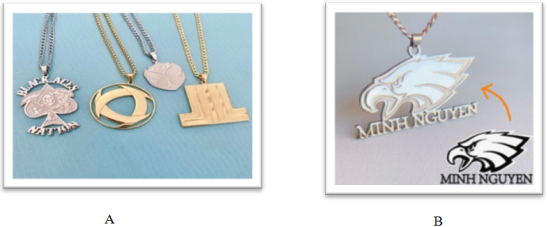
as illustrated in
Figure 4.
Figure 4. The figures show an example of UV printing on metal. (Custom Logo Necklace Personalized Any Logo Necklace Company Icon Necklace Deep Engraving Men's Necklace - Etsy Egypt, n. d).
Here is an overview of some UV printers:
Mimaki UJF-3042 Printers: This type of printer provides printing on various range of materials, including metals, glass, and plastic, and is characterized by producing vibrant colors and accurate details.
Roland VersaUV LEJ-640 Printers: This type of printer supports printing on both flat and roll surfaces, and provides vibrant colors and detailed engravings.
EFI H1625 Printers: It prints on a variety of materials, including metals, and is characterized by processing the large-format sizes.
UV printing is an advanced contemporary technology that enhances print quality and offers flexibility in processing various surface types of different materials, making it an ideal choice for numerous industrial and advertising applications
.
Here are some examples of UV printing on metal specifically for advertising purposes:
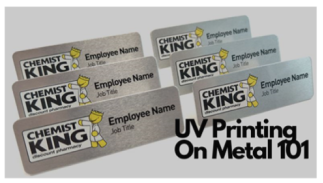
Figure 5. The figure shows UV printing for advertising applications. (UV Printing on Metal 101, A Basic Knowledge Guide - KDM Fabrication, n.d).
2.3.4. Thermal Printing
This technique utilizes a thermal printhead to apply prints onto heat-sensitive paper or a ribbon coated with ink, producing visible text or images. It is well-suited for rapid and cost-effective printing. It is also used in digital printing applications on metal, as well as for ornamental accessories, signs, receipts, labels, and a variety of other uses.
1) Sublimation Printing
Sublimation printing is a technique that involves transferring the ink from a solid state directly to a gaseous state without transitioning through a liquid state. Such a process is accomplished by applying heat and pressure to transfer paper that has been printed with sublimation ink, where the ink sublimates from the paper and permeates the surface of the material, infiltrating its pores, resulting in durable print that is highly resistant to external environmental factors.
The researcher then proceeds to explain the steps of the sublimation printing process:
2) Design Creation
Design creation is accomplished through the use of advanced digital design software such as Photoshop or Adobe Illustrator, which enable designers and artists to develop intricate and complex designs, which can then be printed with the utmost precision and highest quality.
3) Printing Process
The printing process involves utilizing a specialized thermal transfer printer with sublimation paper. Sublimation inks, designed to transition from a solid to a gaseous state under high temperatures, must be used, enabling the precise transfer of the design onto the material, ensuring high fidelity and optimal quality of the final print.
4) Preparation of Materials
The materials intended for printing using this technique are diverse, including polyester fabrics, polymer-coated metals, ceramics, and plastics. As the material must be properly prepared to ensure optimal adhesion of the sublimation ink. For cloth, it is imperative to ensure that they are thoroughly cleaned and free from wrinkles. For ceramic or metal materials: it is imperative to ensure that they are devoid of oils, dust, or other contaminants that could affect the quality of the print.
5) Ink Transfer
After preparing the design and the transfer paper for printing, the printed paper with the sublimation ink and the required design is placed on the surface of the material to be printed. The paper is then secured to prevent movement during the printing process. A heat press machine is used to apply high levels of heat and pressure to both the paper and the material simultaneously. This heat and pressure cause the ink to transition from a solid to a gaseous state, allowing it to permeate the surface of the material and permanently bond with it. This process typically takes a few minutes, depending on the type of substance and ink used.
6) Finalizing the Print (Product Output)
Once the ink transfer to the desired material is completed, the surface is left to cool. The paper is then quietly and carefully removed, revealing the final print. The result is a high-quality, permanent print with vibrant colors and precise details.
2.3.5. Features of Thermal Transfer Printing
Thermal transfer printing is known for its durability and resistance to external factors, such as repeated washing (for clothing) and exposure to sunlight. This makes it suitable for a wide range of applications, including clothing and ornamental accessories, decorative cups, signs, and promotional products). This enhances its distinction in practical and creative applications.
Examples of thermal Transfer Printing Applications:
(i). Printing on Metal Medals
This technique can be used to print custom designs or unique images onto metal medals. In this process, the desired design is printed onto a special transfer paper using heat transfer ink. The paper is then placed on the metal medal, which is coated with a special layer of alkyd or polymer. The medal is then subjected to heat and pressure using a specialized machine. The heat transforms the ink into a gas, allowing it to permeate the designated layer on the metal surface, resulting in a precise and durable design that won’t wear off.
Figure 6 shows an example of printing on metal medals, showcasing double sided gold/ silver sticker papers specifically designed for medals and badges.
Figure 6. Example of printing on metal sheets (medal). (Double Sided Gold/Silver Sticker Sheets - For Medals and Trophies - Inkjet - IFF (iffstore.com), (n.d)).
(ii). Printing on Metal Medals
Thermal transfer printing is used to print designs or text on metal medals intended as gifts or awards. Initially, the design is printed onto transfer paper. This paper is then wrapped around the medal and secured with adhesive tape. The medal is subjected to heat and pressure using a small oven or specialized machine. The solid ink converts to gas and interacts with the metal surface, which improves the design's durability and resistance to wear and scratches.
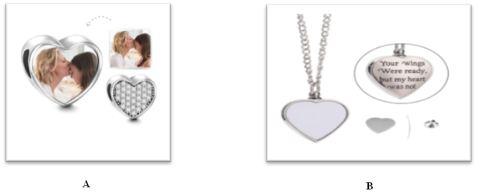
Figure 7 shows a printed metal medal using the thermal transfer technique.
Figure 7. The figure shows a printed metal medal using the thermal transfer technique. (Sublimation Jewellery, Sublizon, n.d).
(iii). Printing on Metal Bottles
Designs can be printed on metal bottles, such as water bottles and other products, for use as promotional products or gifts. The design is first printed onto transfer paper, which is then placed on the surface of the metal bottle. The bottle is then exposed to heat and pressure using a specialized machine. This process allows the ink to interact with the metal surface, resulting in a high-quality, durable design on the product.
2.3.6. 3D Printing
This method is an innovative technique that enables the manufacturing of unique pieces in limited or small quantities. It involves constructing a three-dimensional model layer by layer using specialized materials, such as plastic, metals, or others as desired. The process relies on digital design with CAD software, which divides the model into very thin layers. The dedicated printer then builds the shape layer by layer with utmost precision, regardless of the material used, until the final shape is complete. This technique facilitates the production of high-quality, detailed, and complex customized models
| [9] | Gibson, I., Rosen, D. W., & Stucker, B. (2015). Additive Manufacturing Technologies: 3D Printing, Rapid Prototyping, and Direct Digital Manufacturing (2nd ed.). Springer. |
[9]
.
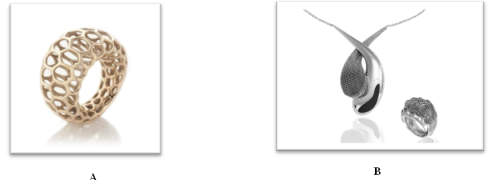
The researcher then presents an example of metal 3D printing, as illustrated in
Figure 8.
Figure 8. The figures show jewelry designs created using 3D printing technology (A shows a product made of gold, and B shows a product made of platinum). (Innovation and differentiation, precious metal 3D printing in jewellery, metal-am.com, n.)
Direct metal laser sintering DMLS:
This technique is used in metal 3D printing, utilizing a laser selectively melts powdered metal to build up layers sequentially until the desired shape is achieved. It is widely utilized in various industries, including medical, aerospace, automotive, and others
| [23] | Berman, B. (2012). 3D Printing: New Industrial Revolution Afaq, 55(2), 155-162. |
[23]
.
The following are examples of devices and equipment used:
| [24] | Williams, D. (2017). A Comparative Analysis of UV and LED Printing Techniques. Journal of Advanced Printing Technology, 27(2), 210-222. |
[24]
.
Devices:
EOS M 290 Printers These are designed for 3D printing using integrated laser technology for metal materials. They can create complex and detailed components from stainless steel alloys, including titanium and nickel. Additionally, they use lasers to melt metal powder and build parts with exceptional precision and accuracy. Which allow them to be used in advanced artificial applications, such as aircraft industry and medical field
| [25] | Jones, R., Haufe, P., Sales, E., Iravani, P., Olliver, V., Palmer, C., & Bowyer, A. (2011). RepRap - the replicating rapid prototyperRobotica, 29(1), 177-191. |
[25]
.
SLM Solutions printers these printers provide similar 3D metal printing using SLM (Selective Laser Melting) technique, which enables the production of complex and durable parts.
Renishaw AM400 printers: They utilize integrated laser technology to manufacture metal parts, offering high precision in producing complex, detailed, and advanced components
| [26] | Lipson, H. and Kurman, M. (2013) Fabricated: The New World of 3D Printing. John Wiley & Sons, Hoboken. |
[26]
.
Materials:
(Stainless Steel Powder): Stainless steel powder is used in manufacturing durable and corrosion-resistant materials, such as industrial components and precision parts.
(Titanium Powder): Titanium powder is used in advanced applications that require a combination of durability and lightweight properties, such as in manufacturing prosthetics and aerospace components.
(Nickel Powder): Nickel powder is used in industries that require a high resistance to corrosion and heat, making it suitable for advanced industrial applications.
2.3.7. Practical Framework
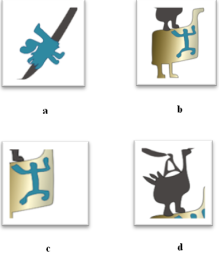
The researcher utilized decorative designs and symbols from primitive rock art in the AlUla region to create artistic pieces for ornamental accessories. The process included hand drawing, creating sketches and models, which were then transferred to digital programs like Adobe Illustrator and Gold Matrix. These tools were used to simulate various digital printing methods, incorporating elements and motifs from specific locations in the region. The researcher carefully selected meaningful symbols that could be used artistically and commercially, ensuring they were appropriate for each printing technique and matched the specific metal type and specifications of the decorative pieces.
The following is the first artistic product of practical research applications: (Prepared by the researcher)
(i). The First Artistic Product of Practical Research Applications
Figure 9. The figure shows the basic shape on stone. (The origin of Wadi Al-Naam’s name).
Figure 10. The figure shows the symbol used to print on the product.
Table 1. The first artistic product’s final form of the practical research applications.
Product | 
| 
| 
|
Symbols used to design the product | 
| 
| 
|
Human and Animal Symbolism were used and printed with Nile blue color. |
Printing Technology Used | UV Digital Printing. |
Material | Gold. |
Figures analysis | Elements of various shapes of ostriches in multiple positions and sizes. The decorative design is inspired by various forms of the ostrich, which is believed to have inhabited the Jabal An-Na'am region. |
(ii). The Second Artistic Product of Practical Research Applications
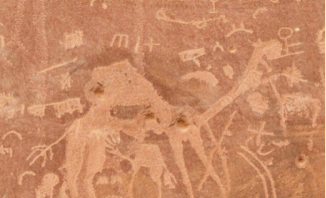
Figure 11. The figure shows the basic shape on stone of camel carvings.
(Camel carvings in AlUla commemorate the history of the Ship of the Desert, Makkah Newspaper).
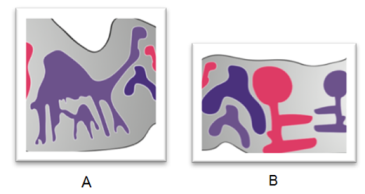
Figure 12. The symbols used to print on the product.
Table 2. The second artistic product's final form of the practical research applications.
Product | 
| 
| 
|
Symbols used to design the product | 
| 
| 
|
Human and Animal Symbolism were used and printed in blue-violet, yellow, and red-violet with white. |
Printing Technology Used | Digital Printing with thermal adhesive on silver metal. |
Material | Silver metal |
Figures analysis | Human and Animal Symbolism were used and printed with thermal adhesive technology. The decorative design is derived from various forms of human and animal elements in various sizes, as well as there are large groups of diverse carvings and drawings spread across the pages of the AlUlaMountains, camels have an important role in Arab history and heritage in the current time. Furthermore, they are mentioned in the Qur'an, hadiths, literature, and poetry, indicating their status. In addition, symbols carved on the rock represent motherhood. |
(iii). The Third Artistic Product of Practical Research Applications
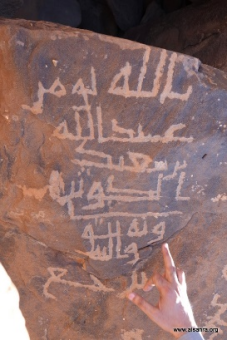
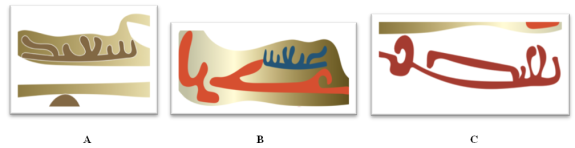
Figure 13. The figure shows some of the main figures on rocks.
(From the supplication formulas in the inscriptions of Al-Aqra’, fifty new inscriptions, the desert team).
Figure 14. The figures show the symbols used to print on the product.
Table 3. The third artistic product's final form of the practical research applications.
Product | 
| 
|
Symbols used to design the product | 
| 
| 
|
Printing Technology Used | 3D Printing technology (Metal casting) |
Material | Gold. |
Figures analysis | The written symbols inscribe on the stone in Jabal Al-Aqra area in AlUla, for a person named Saeed. These inscriptions include the imperative formulas "By Allah's grace" and "joining ties of kinship", these two terms are used repeatedly. |





 Share This Article
 Twitter
 Linked In
 Facebook
 Copy
Copy Download